
Building the Main Equipment Structure
Welding and frame assembly turn cut steel tubes, plates and brackets into the main structure of commercial gym equipment. This stage affects equipment dimensions, alignment, stability, appearance and the fit of components added during final assembly.
Strenvix Fitness fabricates frames for strength machines, cable crossover machines, squat racks and selected cardio equipment. MIG/MAG welding stations are used according to the product structure and production requirements. Welding methods, joint positions and frame configurations vary by model.
Before welding begins, processed parts are identified and checked against the confirmed model. OEM changes involving frame dimensions, adjustment positions, mounting brackets or equipment configuration should be approved before parts enter frame assembly.
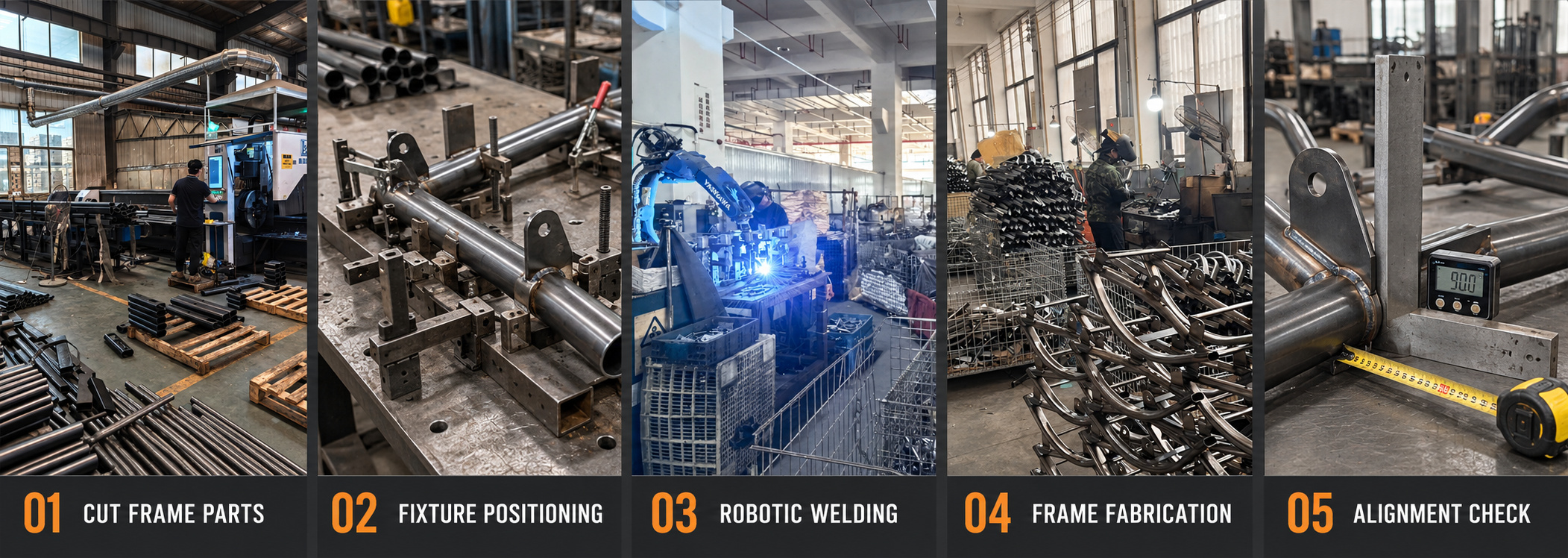 Part Positioning and Fixture Setup
Cut and formed tubes, plates and brackets must be positioned correctly before welding. Connection points, frame angles and mounting locations are reviewed according to the required structure.
Fixtures may be used to hold related parts in position during fabrication. Their purpose is to reduce movement and support repeatable alignment across production quantities. The setup still needs to match the processed parts received from steel cutting and tube processing.
If a buyer requests a structural change, the revised dimensions should be reviewed before fixture setup. Even a small change to a bracket or hole position can affect later installation of pulleys, covers, pads, adjustment parts or accessories.
MIG/MAG Welding and Joint Formation
Frame joints are welded according to the product structure and required connection sequence. Heat input, weld position and the order of fabrication need to be controlled to limit avoidable distortion.
Weld appearance alone does not confirm a correct frame. The joint must also be properly positioned, and the completed structure must remain suitable for later grinding, powder coating and equipment assembly.
Different products place different demands on welding. A squat rack uses a different frame arrangement from a selectorized strength machine, while cardio equipment may combine welded structures with additional housings and mechanical components. Material and component requirements are reviewed through our gym equipment materials and components process.
Dimensional and Alignment Checks
After frame fabrication, key dimensions and connection points are checked before the frame moves to finishing. The inspection may include overall dimensions, left-to-right alignment, mounting locations, base contact points and the position of brackets or adjustment structures.
Frames should sit correctly without unintended twisting or visible deformation. Where several welded sections must connect later, their mating points require particular attention.
For a new OEM model, the first completed frame should be reviewed before full batch welding. If a structural issue is found at this stage, it is easier to correct the setup than after an entire production quantity has been fabricated.
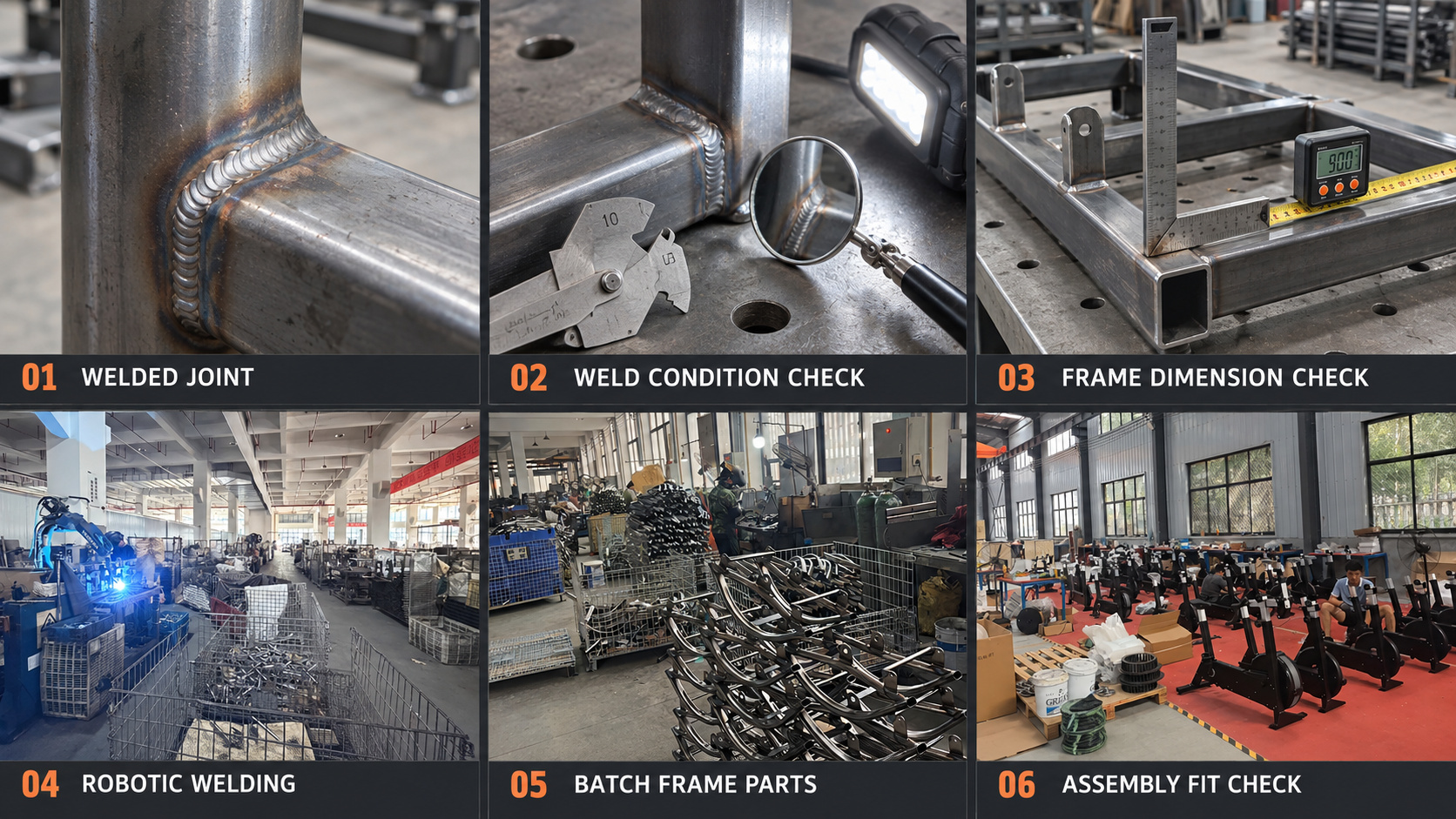 Weld Review and Surface Preparation
Welded frames are visually reviewed for joint condition, missed welds, excessive spatter and areas requiring correction. The frame then proceeds to grinding and surface preparation before powder coating.
Grinding should prepare the visible and functional areas without unnecessarily weakening the joint. Sharp edges, heavy spatter and uneven areas can affect appearance, handling and coating quality.
Welding inspection is one stage of the wider commercial gym equipment manufacturing process. Final stability and function can only be assessed after the correct components have been installed and the machine has been assembled.
Information Needed for an OEM Frame Review
For a quotation or sample review, provide the equipment model, estimated quantity, intended application and destination market. For a revised or buyer-designed frame, include dimensional drawings, tube specifications, joint details, mounting positions and reference images.
Also identify the components that must connect to the frame, including pads, pulleys, weight stacks, covers, adjustment mechanisms and accessories. Clear information allows us to review processing requirements, sample timing, welding preparation and possible effects on bulk production before confirming the order.