
 Manufacturing Commercial Gym Equipment in Dezhou
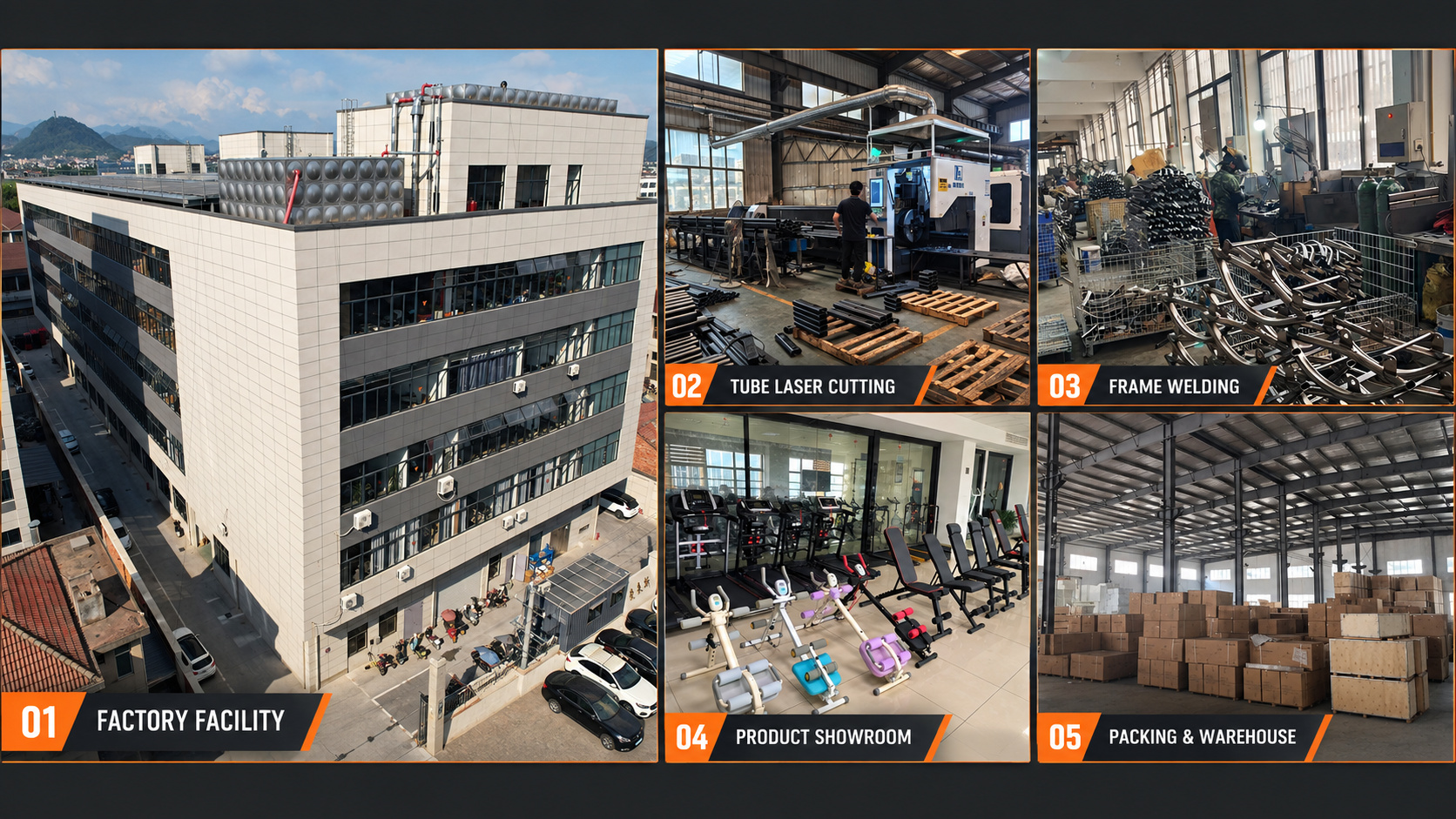
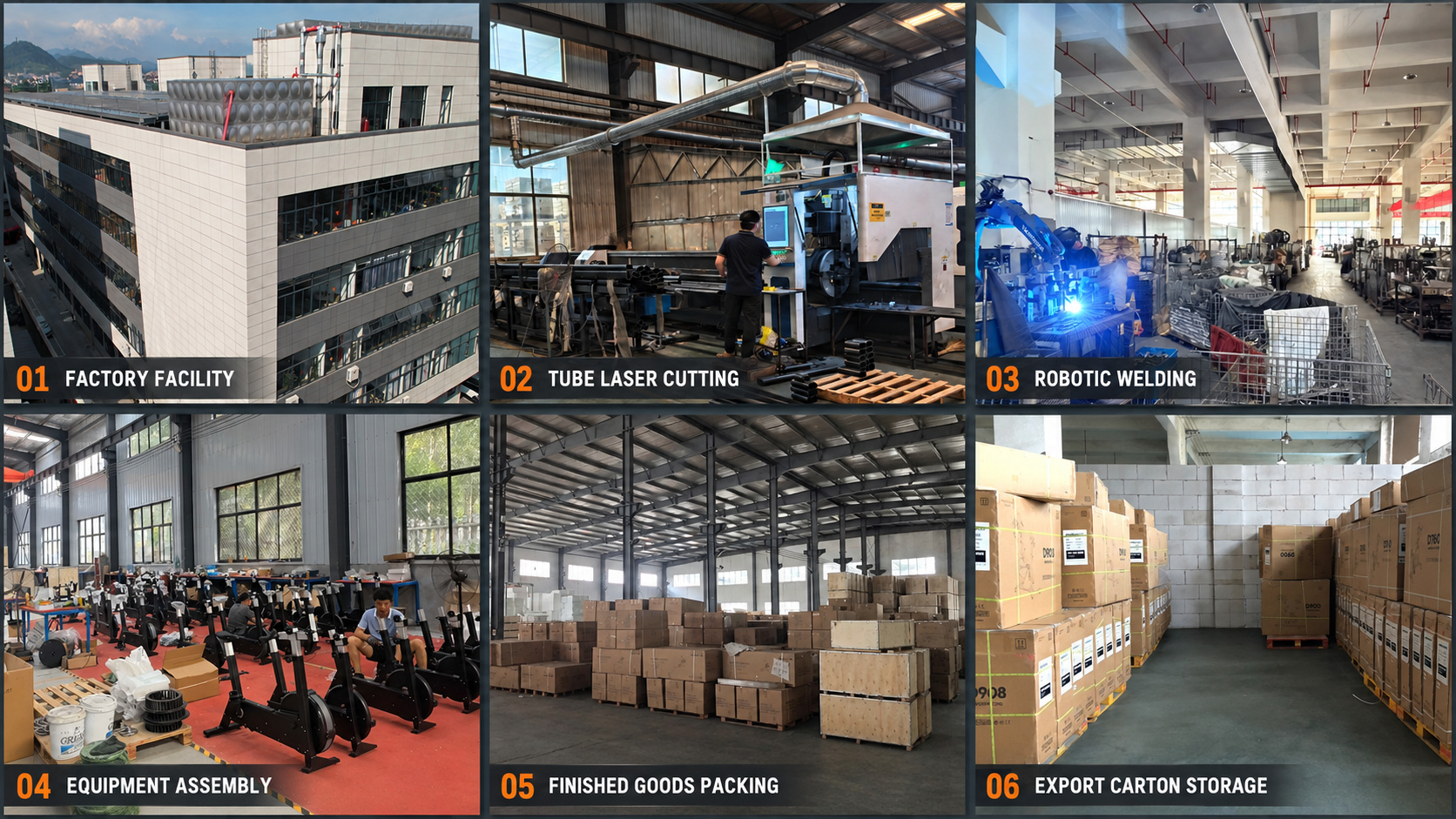
Strenvix Fitness manufactures commercial cardio and strength equipment in Tianqu Industrial Park, Decheng District, Dezhou, Shandong, China. Established in 2011, the factory covers approximately 33,600 m² and operates around 6–8 production and assembly lines.
Production covers steel preparation, cutting, tube processing, welding, grinding, powder coating, upholstery, component assembly, functional inspection and export packing. The main product range includes treadmills, exercise bikes, rowing machines, cable crossover machines, hip abduction machines and squat racks.
Approximate monthly capacity is 4,000–6,000 complete machines, depending on product mix, order quantity and customization requirements. Production schedules are confirmed after models, configurations, quantities, OEM details and component availability have been reviewed.
Materials and Component Preparation
Commercial gym equipment uses different materials and components according to its structure and function. Main materials include carbon steel tubing and plate, selected stainless steel components, PU upholstery, high-density foam, steel cables, pulleys, bearings, fasteners, ABS covers and rubber components.
Before production, the approved model and order specification are used to prepare the required materials. Important details may include tube dimensions, steel parts, frame color, upholstery, weight stacks, resistance components, accessories and private-label requirements.
Incoming materials and components are checked before entering production. Buyers can review the main gym equipment materials and components used across the product range.
Steel Cutting and Tube Processing
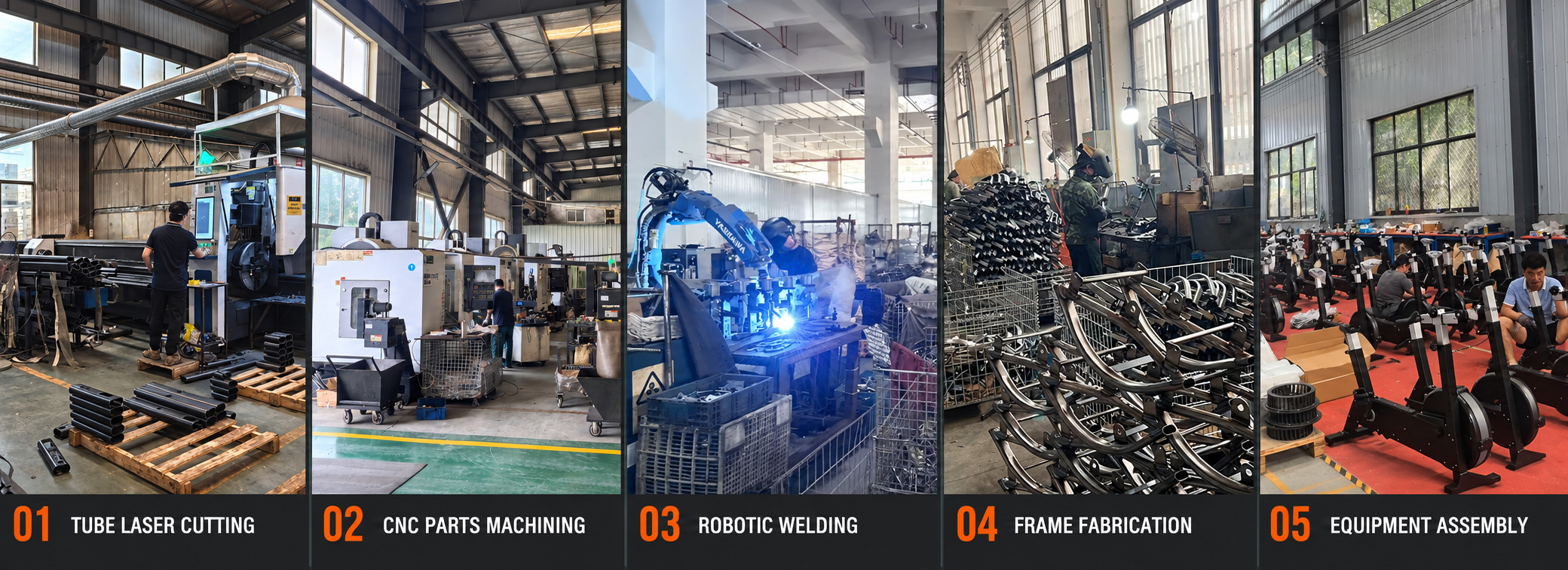
Carbon steel tubing and plate are processed according to the frame drawings and model requirements. Available production processes include CNC laser cutting, tube laser cutting, bending, punching and drilling.
Cutting dimensions, hole positions and tube shapes affect later welding, assembly and equipment alignment. Incorrect preparation at this stage can create fitting problems when cables, covers, adjustment parts or upholstery are installed.
Parts are therefore prepared and identified according to the relevant model before moving to fabrication. More details are available on our Steel Cutting & Tube Processing page.
 Welding and Frame Fabrication
Processed tubing and steel parts are positioned and joined using MIG/MAG welding stations. Frame dimensions, alignment, joint position and weld condition are checked during fabrication.
Different machines require different frame structures. A cable crossover must support cable routing, pulley positions and weight-stack movement, while a squat rack requires accurately aligned adjustment holes and stable frame connections. Cardio equipment uses additional brackets and mounting points for drive, resistance or console components.
After welding, frames undergo dimensional and visual checks before grinding and surface preparation. The full process is explained on our Welding & Frame Assembly page.
Grinding, Surface Preparation and Powder Coating
Welded frames are prepared before powder coating. Rough weld areas, sharp edges, surface contamination and visible irregularities must be addressed because they can affect the appearance of the finished frame.
Prepared frames move through powder application and curing according to the selected production requirements. Inspection may cover approved color, surface coverage, coating consistency, welded areas, corners and visible scratches.
Custom frame colors can be coordinated according to the equipment series and order quantity. A coated metal sample or approved frame sample may be required when close color matching is important.
 Upholstery Cutting and Pad Production
Strength machines with seats, backrests or support pads require separate upholstery production. PU material and high-density foam are prepared according to the approved model, pad shape and color requirements.
Production can include material cutting, foam preparation, cover sewing, pad covering and final assembly. Inspection may review material color, foam construction, stitching, corners, surface tension, pad dimensions and mounting positions.
The completed pads must fit the equipment frame without interfering with adjustment or machine movement. Customized material, stitching or pad requirements should be approved before bulk cutting and sewing begins.
Equipment Assembly
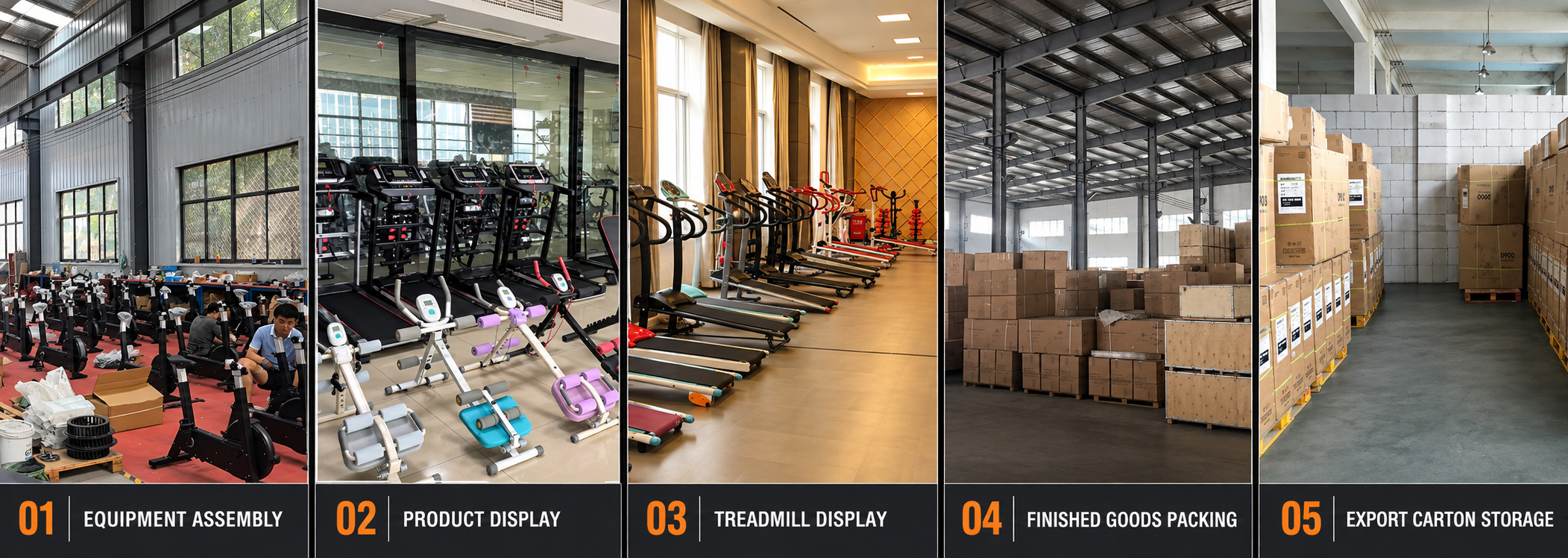
After the frames and components are ready, machines move to assembly. Depending on the equipment type, assembly may include:
- Weight stacks and guide rods
- Steel cables and pulleys
- Bearings and movement parts
- Seats, pads and adjustment mechanisms
- Handles and accessories
- Covers and guards
- Resistance and drive components
- Consoles and electrical parts where applicable
- Fasteners, labels and model information
Component fit, cable routing, adjustment range and fastening are checked during assembly. Detailed production information is available on our Equipment Assembly page.
Functional Testing and Final Inspection
Completed equipment is checked according to its structure and function. Strength-machine inspection may cover movement path, cable routing, pulley operation, weight-stack travel, adjustment mechanisms, fasteners and assembled stability.
Cardio equipment may require checks of resistance, drive operation, console functions, adjustment, noise and electrical functions according to the selected model.
Final inspection can also include:
- Frame and surface appearance
- Upholstery and stitching
- Logo and label position
- Accessories and hardware
- Product configuration
- Packing materials
- Manual and shipping marks
Third-party inspection or testing can be arranged according to the destination market, equipment model and order requirements.
 Production Timing and Order Information
Standard mass production normally requires approximately 30–45 days. Larger or more customized programs may require around 45–60 days. The final schedule depends on the product models, quantity, component availability, OEM requirements and sample approval.
To review production requirements, buyers should provide the selected models, quantity per model, target market, configuration, logo and color requirements, packaging details, destination and expected delivery time. Clear specifications help us confirm production feasibility, inspection points, packing method and shipment preparation before the order begins.