
Frame Processing Starts with Confirmed Specifications
Steel cutting and tube processing determine whether commercial gym equipment frames can be welded, assembled and aligned correctly. Strenvix Fitness processes carbon steel tubing and plate for strength machines, squat racks, cable crossover machines and selected cardio equipment.
Before cutting begins, we confirm the equipment model, frame dimensions, tube profile, material thickness, hole positions and required order quantity. OEM changes should be reviewed before material preparation because adjustments to frame size, structure or mounting points may affect drawings, fixtures, component fit, sample timing and quotation.
Buyers with their own design should provide usable drawings, dimensional requirements and intended application. A physical reference sample or clear product photographs can support the review, but critical dimensions still need written confirmation.
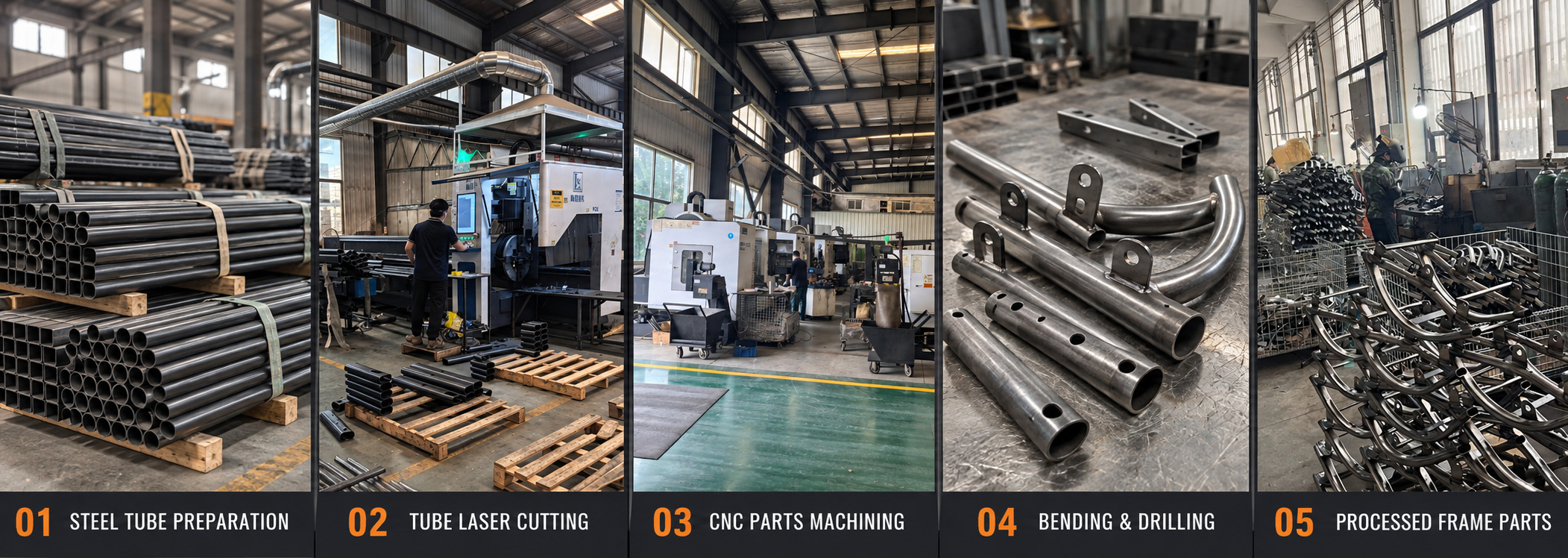 CNC Laser Cutting and Tube Cutting
Carbon steel tubes and plates are cut according to the dimensions required for the selected frame structure. CNC laser cutting and tube laser cutting are used where applicable to prepare straight cuts, shaped profiles, connection openings and other model-specific features.
Cutting accuracy matters because incorrectly sized parts can create gaps, misalignment or additional correction work during welding. Hole locations and connection points also need to match adjustment parts, brackets, covers and other components used later in production.
Material requirements are confirmed through the gym equipment materials and components review before production quantities are released.
Bending, Punching and Drilling
Some equipment frames require bent tubes, punched openings or drilled holes for bolts, adjustment pins, bearings, pulleys, covers and accessories. Each operation must follow the confirmed product structure rather than a general dimension shared across different models.
Tube profile, wall thickness, bend radius and the distance between holes can affect processing. A design change that appears small may require a different setup or additional sample verification.
For customized projects, buyers should confirm equipment dimensions, adjustment ranges, accessory positions and any requested configuration before the first sample is processed. Changes made after cutting may result in material loss, additional setup cost and a longer sample schedule.
Sample Parts and First-Article Confirmation
For a new or modified model, the first processed parts should be checked before full production. The review can include overall length, cut profile, hole position, bend angle, connection points and compatibility with related components.
If a complete sample is required, processed steel parts continue through welding and frame assembly before the equipment structure can be reviewed as a whole.
Standard models normally require less preparation than revised OEM structures. Sample timing depends on drawing completeness, material availability, processing complexity and whether new fixtures or structural confirmation are needed.
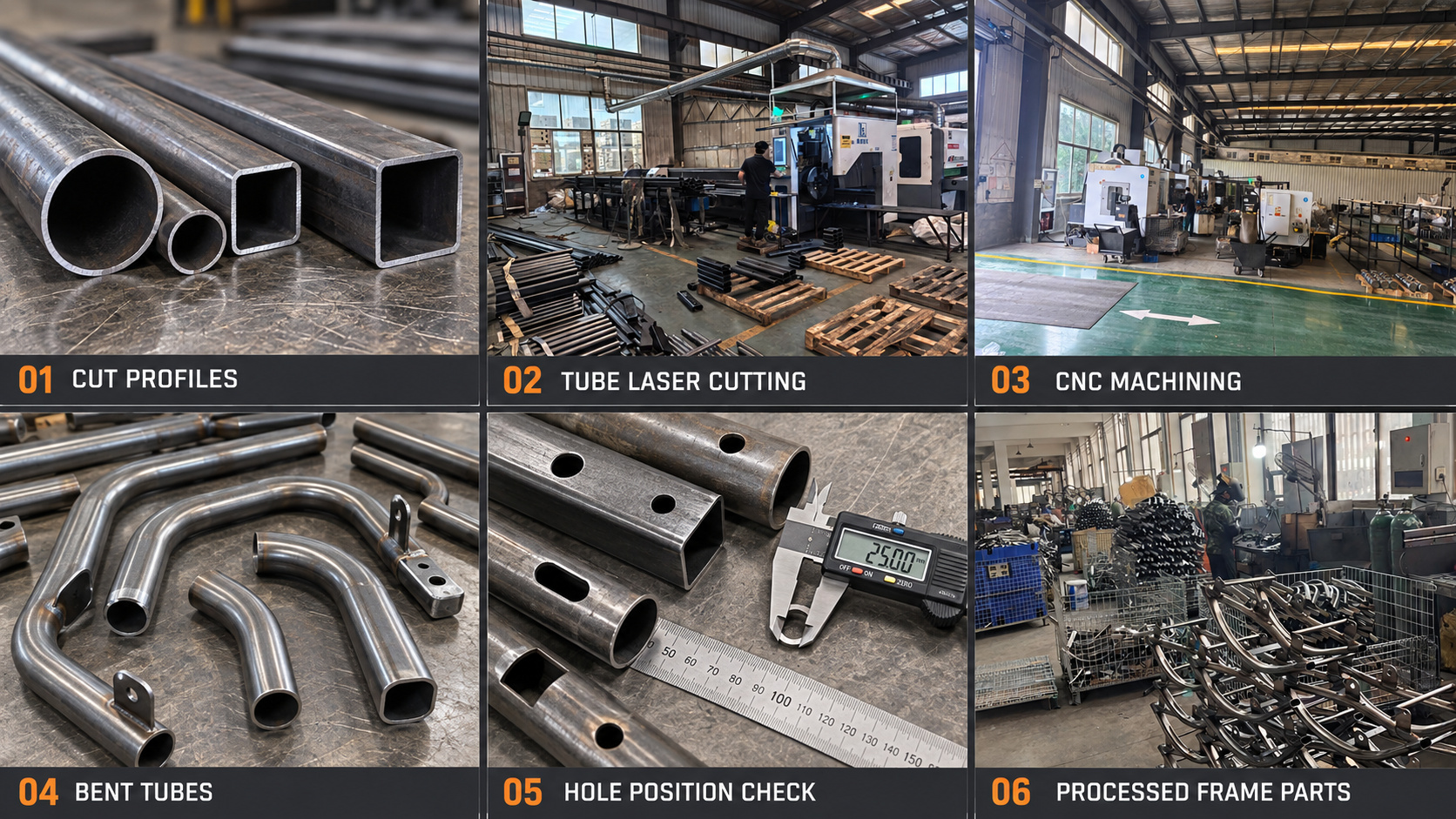 Checks During Bulk Tube Processing
During bulk production, processed parts are checked against the confirmed model requirements. Inspection focuses on dimensions, hole positions, bend shape, cut condition and visible deformation where applicable.
Parts also need to be separated or identified correctly when an order contains several equipment models. Mixing similar-looking tubes or brackets can cause delays during welding and assembly.
Processing checks do not replace later frame inspection. Welded structures still require dimensional and alignment review, while completed equipment requires assembly and functional checks through the broader commercial gym equipment manufacturing process.
Information Needed for a Quotation
To review steel processing requirements, provide the equipment model, quantity per model, frame dimensions and intended commercial application. For OEM structures, include drawings, tube specifications, hole positions, bend requirements and reference images where available.
Also identify any required sample, target delivery schedule and destination country. We can then review material preparation, processing requirements, sample confirmation, production timing and the next manufacturing stage before preparing the quotation.