
Assembly for Commercial Equipment Orders
Equipment assembly brings processed frames, upholstery, mechanical parts, electrical components and approved OEM details together into a finished commercial gym machine. This stage affects movement, stability, adjustment, appearance and the buyer’s installation experience after delivery.
Strenvix Fitness assembles commercial treadmills, exercise bikes, rowing machines, cable crossover machines, selectorized strength machines, squat racks and related equipment for distributors, private-label brands, gym chains and project buyers.
Assembly procedures vary by product. A cable crossover machine requires careful cable routing and pulley alignment, while a treadmill requires checks on the drive system, running belt, console connections and operating functions. Each model is assembled according to its confirmed specification and order configuration.
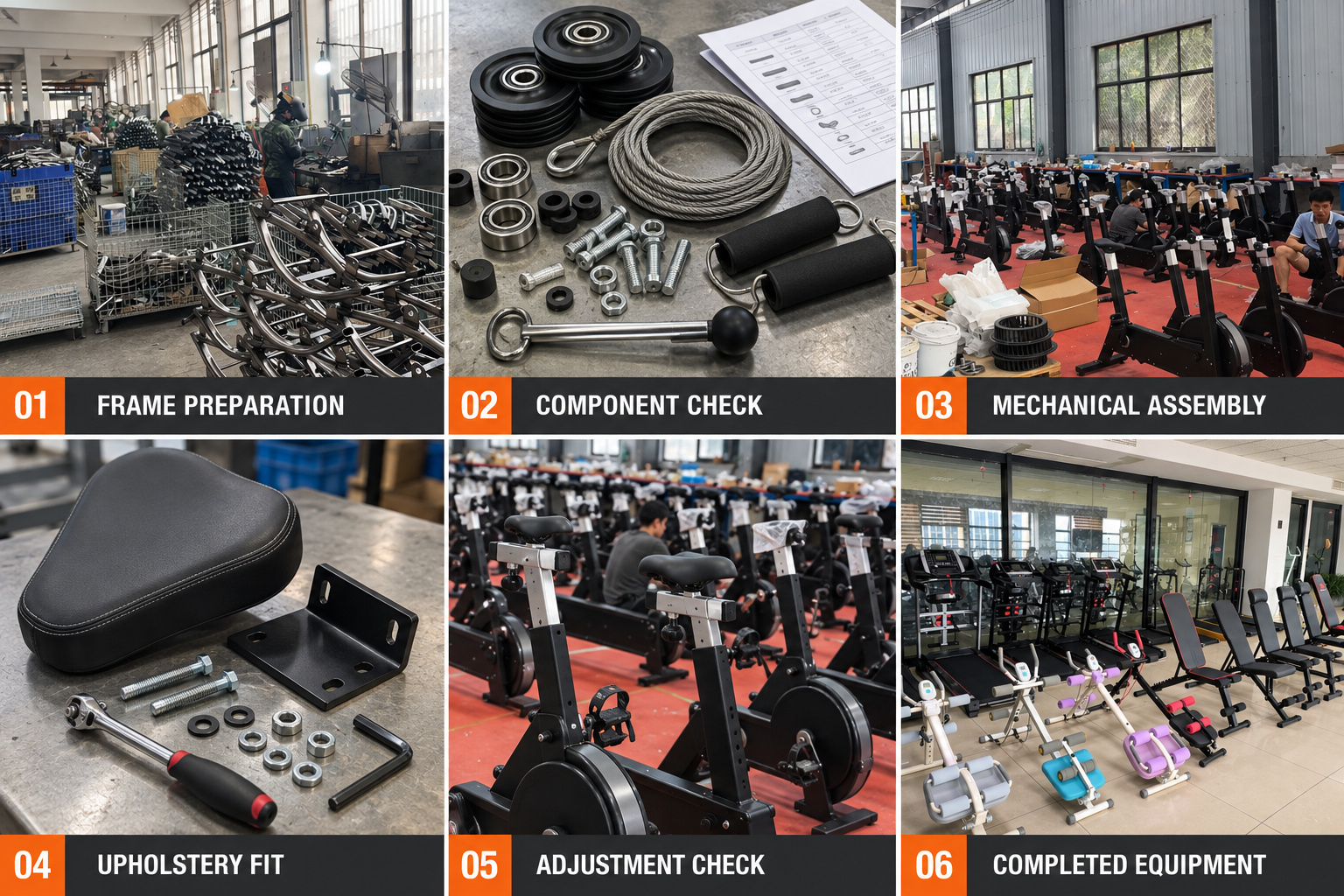 Components Prepared Before Assembly
Before assembly begins, the frame, fasteners, bearings, pulleys, cables, weight plates, adjustment parts, upholstery, covers and accessories are checked against the production specification.
The team confirms whether the components match the required model and approved configuration. This is particularly important for OEM orders that include selected weight stacks, handles, accessories, upholstery colors or other model-based options.
Buyers planning a customized configuration should confirm it before production. Available options and technical limitations are explained on our equipment configuration and accessories page.
Mechanical and Structural Assembly
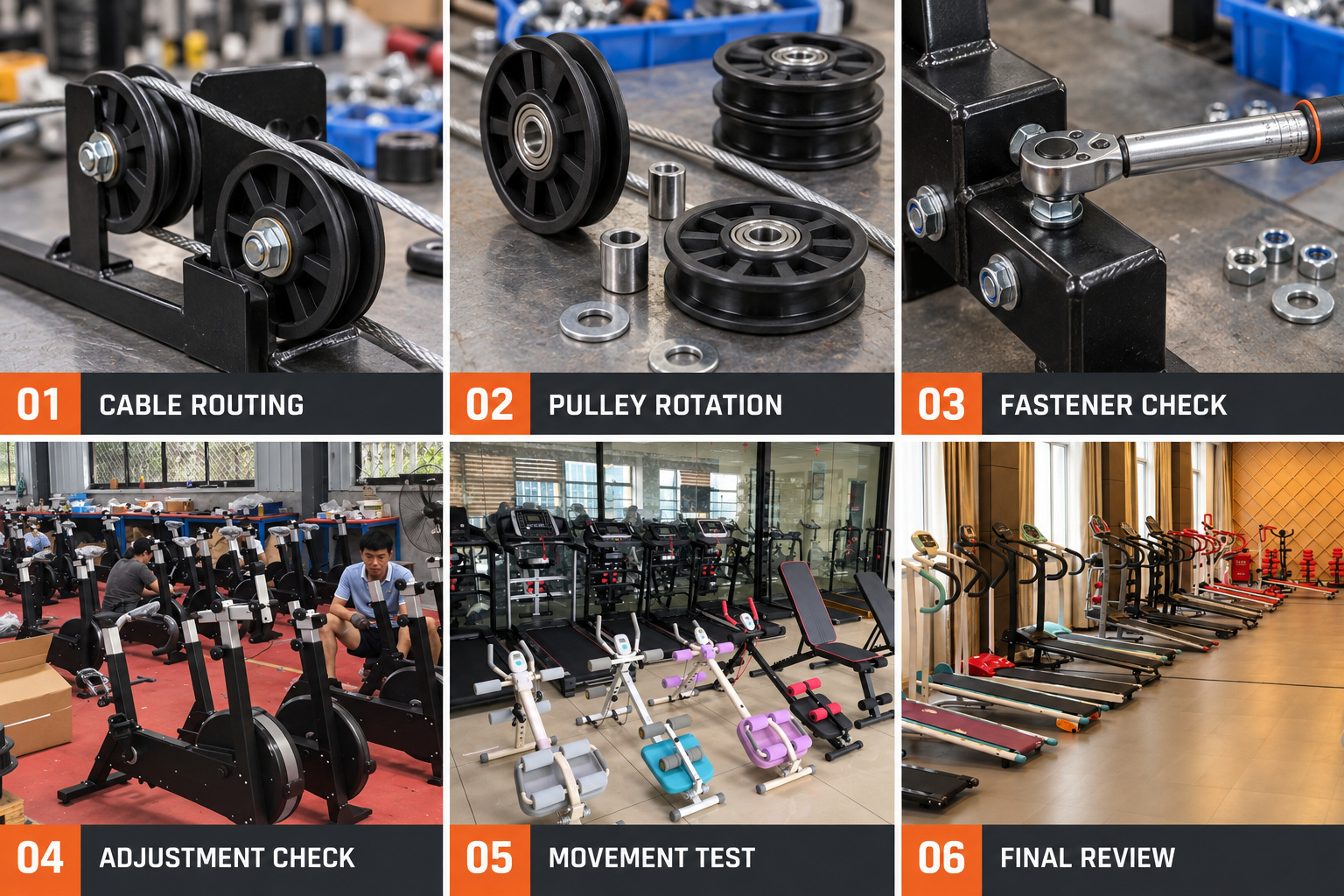
Strength equipment assembly can include installing guide rods, weight plates, cables, pulleys, bearings, handles, adjustment pins, protective covers and upholstered pads. Cable paths must be correctly routed so that movement remains smooth and cables do not rub against the frame or covers.
Fasteners are installed and tightened according to the equipment structure. Adjustment mechanisms, seat positions and moving arms are checked for correct fit and usable travel. For racks and benches, attention is given to frame connection points, supports, locking positions and assembled stability.
The condition of the parts entering this stage also affects the result. Our materials and components page explains the main steel, upholstery, cable, pulley, bearing and plastic components used across different equipment types.
Cardio Equipment Assembly
Treadmills, exercise bikes and rowing machines require model-specific assembly. Work may include fitting drive or resistance components, pedals, cranks, flywheels, running belts, rails, consoles, wiring, sensors, covers and adjustment systems.
After installation, electrical connections and mechanical movement are reviewed before functional testing. A visually complete machine is not automatically ready for packing; operating response, noise, resistance, belt movement and adjustment functions must also be checked where applicable.
Adjustment and Functional Checks
The assembly team checks moving paths, cable tension, pulley rotation, bearing movement, resistance systems, seat adjustments, locking mechanisms and fastener condition. Equipment is adjusted when movement is uneven, a cable is incorrectly tensioned or a component does not align as required.
Appearance is also reviewed after assembly. Powder-coated surfaces, upholstery, covers, labels and exposed hardware are checked for visible damage caused during handling.
 OEM Configuration Control During Assembly
Approved OEM details must remain consistent throughout the bulk order. The assembly team follows the confirmed model specification, color combination, upholstery selection, accessories and branding requirements.
If an order includes special handles, weight-stack changes or alternative components, compatibility must be reviewed before mass production. Not every component can be exchanged without affecting dimensions, movement, safety or packing size. Buyers can review the broader development process through our Custom OEM gym equipment service.
Preparation for Inspection and Packing
After assembly and adjustment, completed equipment moves to final inspection and packing preparation. Depending on the model and shipping plan, machines may be fully assembled or partially disassembled to control packing volume and reduce transport damage.
Removable parts, fasteners, accessories and manuals are organized for packing. The product model, order quantity and packing method are checked before the equipment enters the finished-goods area.
For an accurate quotation, buyers should provide the required models, quantity per model, intended application, configuration requirements, destination country and preferred packing method. These details allow us to review assembly requirements, production timing and shipment preparation for the bulk order.