
Upholstery Made for Commercial Equipment Models
Seats, back pads and support pads affect user contact, equipment appearance and consistency across a commercial gym equipment series. Strenvix Fitness prepares PU upholstery and high-density foam according to the confirmed pad shape, dimensions, color and equipment model.
Upholstery requirements vary between strength machines, exercise bikes and other equipment. Pad size, contour, thickness, stitching and mounting structure must match the approved product rather than being treated as a universal component.
Before cutting begins, buyers should confirm the equipment models, upholstery color, surface texture, stitching preference and any required logo application. Available OEM options are explained further on our upholstery and pad customization page.
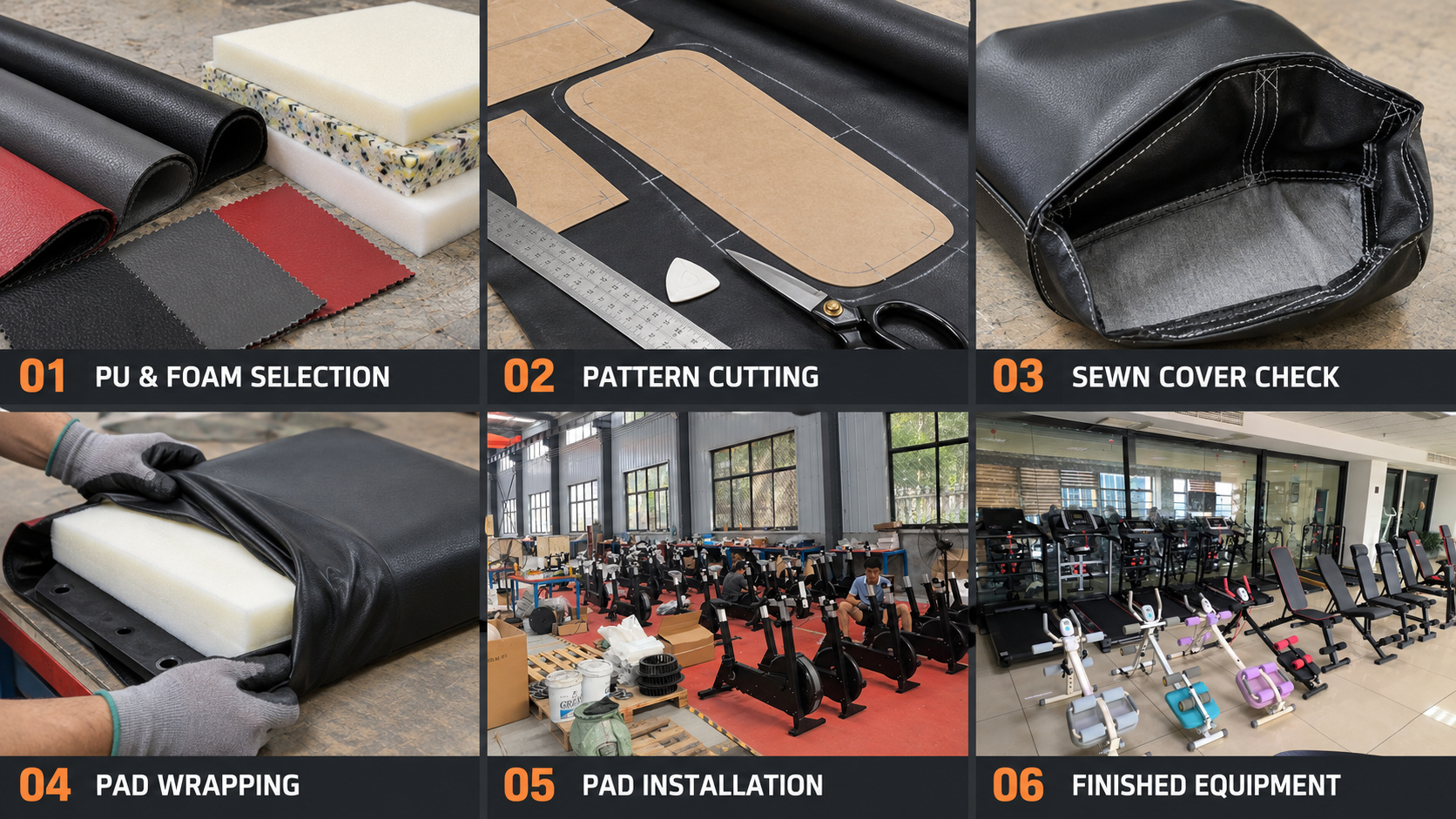 PU Upholstery and Foam Confirmation
PU upholstery is commonly used for seats, backrests and support pads. High-density foam is shaped according to the pad structure and intended equipment application. Material thickness, firmness, texture and color should be confirmed before sample production.
For multi-model projects, buyers often require the same upholstery color and surface appearance across an entire strength equipment series. A physical color sample or approved reference can reduce differences caused by screen displays and photography.
Material details should be reviewed together with other gym equipment materials and components because the finished pad must fit its base plate, mounting points and frame structure.
Pattern Preparation and Material Cutting
Upholstery panels are cut according to the required pad dimensions, contour and seam locations. Foam and supporting materials are also prepared for the specific pad design.
Accurate cutting helps the cover fit correctly during sewing and wrapping. Pieces that are too large can create loose areas or wrinkles, while undersized pieces can place excessive tension on seams and corners.
For a new OEM pad, drawings, equipment references or a physical sample should be provided where possible. Changes to pad size, foam thickness or shape may require revised cutting patterns and another sample confirmation.
Sewing and Cover Construction
Cut upholstery panels are sewn according to the confirmed seam layout. Stitch position, thread color and corner construction influence both appearance and how the cover fits the foam.
Custom embroidery or stitched logo requirements should be confirmed before the cover is assembled. The buyer should provide vector artwork, required dimensions, thread color and placement information. Complex logo work can affect sample cost, MOQ and lead time.
The first sewn cover should be compared with the approved specification before bulk quantities are released.
Foam Wrapping and Pad Assembly
The sewn upholstery cover is fitted over the prepared foam and pad base. Tension should be distributed so that the surface appears even without excessive wrinkles, distorted seams or uneven corners.
Mounting holes and attachment points must remain correctly positioned for later installation. Finished pads proceed to equipment assembly, where their fit with the frame and related components can be confirmed.
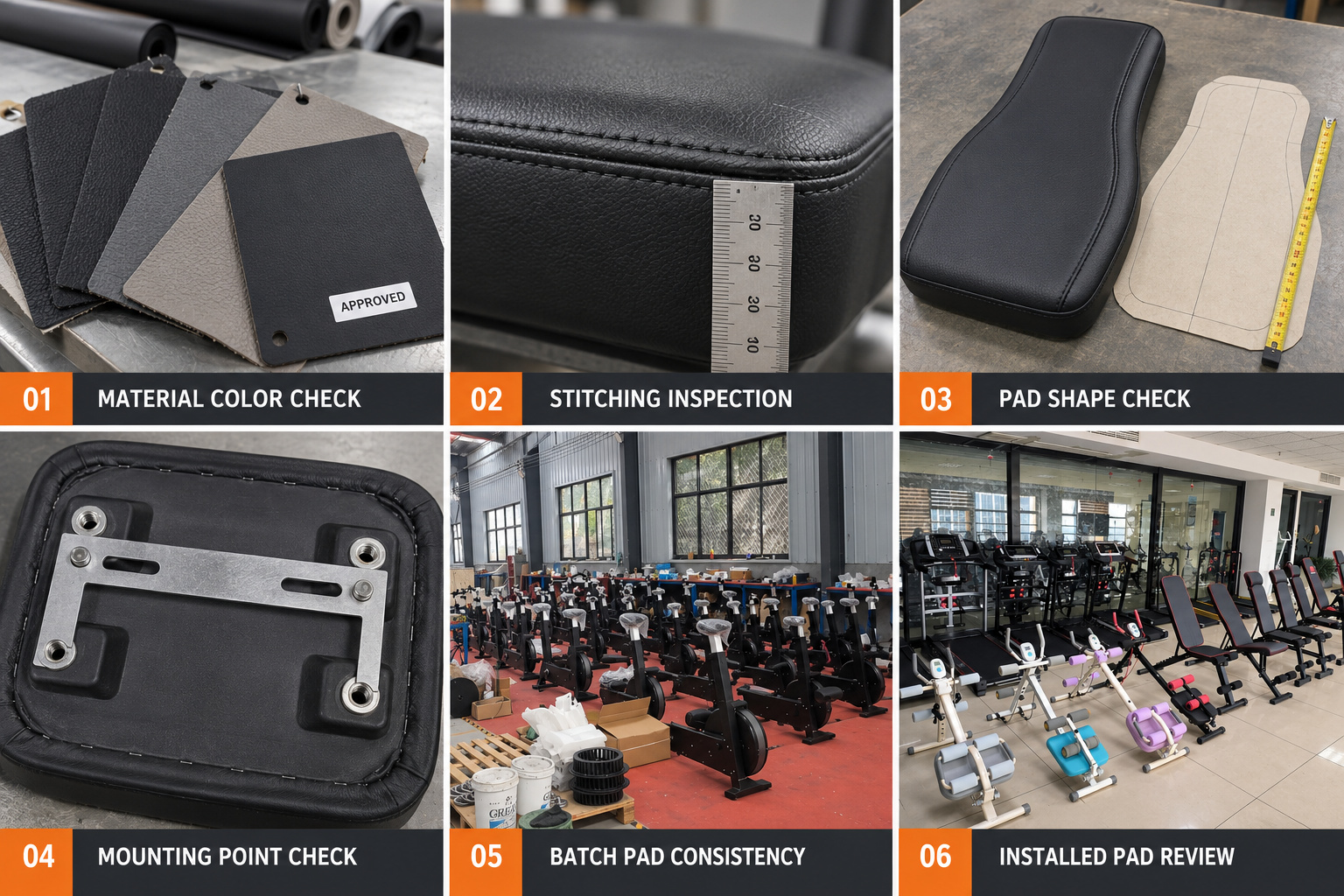 Upholstery and Pad Inspection
Inspection focuses on material color, surface condition, stitching, seam position, pad shape, corner finish and mounting compatibility. Finished pads are also checked for visible wrinkles, loose areas, contamination or damage.
For bulk orders, consistency is reviewed across pads assigned to the same equipment series. Approved sample details should remain available as a reference for color, stitching and overall appearance.
Minor differences may occur between material batches, so requirements that depend on close color matching should be stated before material purchasing and production.
Information Needed for a Quotation
Provide the equipment model, pad type, estimated quantity, required color and any requested material, stitching or logo details. For custom pads, include dimensions, drawings, artwork or a physical reference sample.
Also confirm whether the upholstery must match several equipment models and whether special labels or packaging are required. We can then review sample requirements, material availability, MOQ, production timing and the pad assembly process within our commercial gym equipment manufacturing program.