
Materials Selected for the Equipment and Order
Materials used in commercial gym equipment directly affect frame strength, equipment weight, movement, appearance, maintenance and shipping cost. Strenvix Fitness reviews material and component requirements according to the selected model, intended application, order quantity and OEM specification.
Our main material range includes carbon steel tubing and plate, selected stainless steel parts, PU upholstery, high-density foam, steel cables, pulleys, bearings, fasteners, ABS covers and rubber components. Exact dimensions, thicknesses, grades and component configurations vary by product series and must be confirmed before quotation and production.
This page helps importers, distributors, fitness equipment dealers, private-label brands and gym project buyers understand which material details should be reviewed before approving a sample or bulk order.
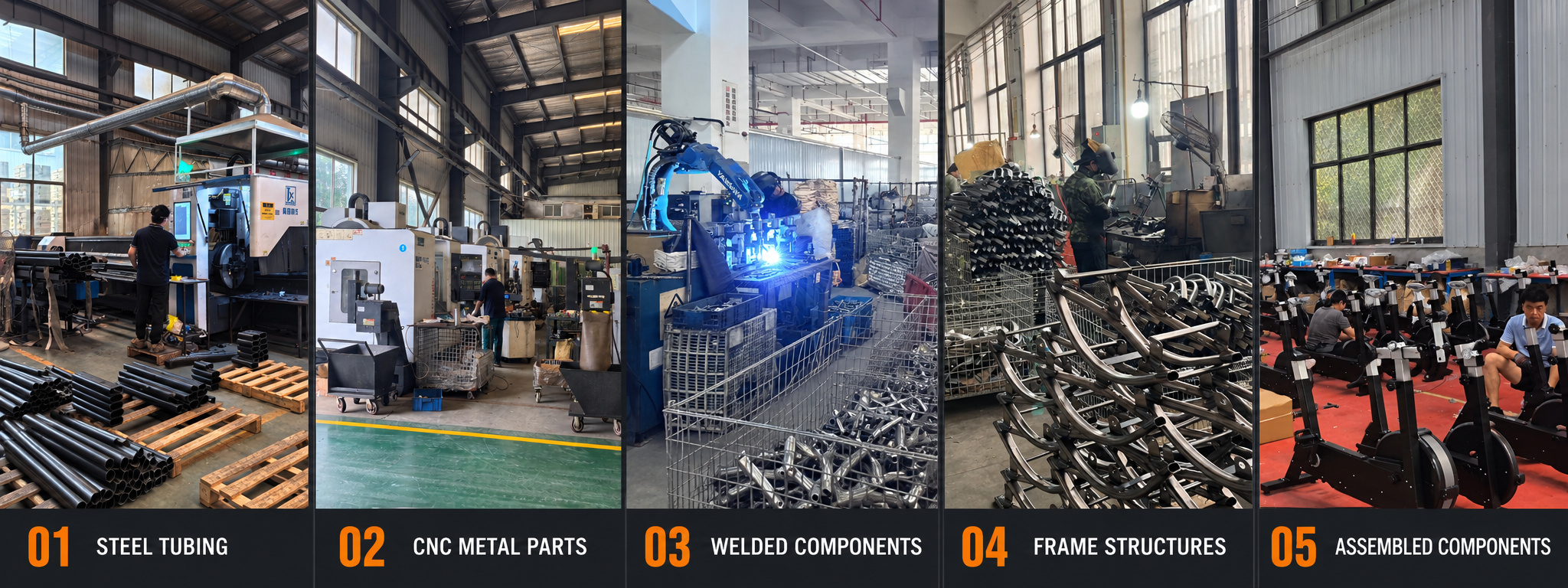 Steel Tubing, Plate and Frame Parts
Carbon steel tubing and plate are commonly used for the main structures of strength machines, squat racks, cable crossover machines and selected cardio equipment. Tube profile, wall thickness, plate thickness and finished frame dimensions depend on the equipment design and expected commercial application.
Before production, buyers should confirm the model, equipment dimensions, intended use and any frame-related customization. Material specifications should not be changed only to reduce cost without reviewing their effect on stability, equipment weight, welding and shipment.
After confirmation, steel materials move to steel cutting and tube processing for cutting, bending, punching or drilling according to the product structure.
Cables, Pulleys, Bearings and Fasteners
Selectorized strength equipment depends on the correct combination of cables, pulleys, bearings, guide rods, fasteners and adjustment parts. These components affect movement consistency, resistance transfer, noise, adjustment and future maintenance.
Component selection is model-specific. For an OEM order, the buyer should identify any required weight stack, cable arrangement, handle type, adjustment mechanism or accessory configuration before sample approval.
During assembly, cable routing, pulley movement, bearing operation and fastener installation are checked according to the confirmed equipment configuration. More details are covered on our equipment assembly page.
Upholstery, Foam and Contact Surfaces
Seats, back pads and support pads commonly use PU upholstery over high-density foam. The upholstery color, surface texture, stitching method, foam shape and pad dimensions can vary between equipment series.
For customized orders, buyers should provide the preferred color reference and identify whether matching upholstery is required across several strength machines. A physical or approved sample is useful when color consistency, texture or stitching appearance is important.
Rubber grips, foot pads and protective contact parts are selected according to the machine structure and intended use. Their fit, attachment and surface condition should be checked during assembly and final inspection.
Covers and Appearance Components
ABS covers and other formed protective parts may be used around moving components, resistance systems or internal structures. Their size, mounting position and color must match the approved model.
Appearance components can also include end caps, adjustment knobs, labels, decorative plates and logo parts. For private-label projects, these items should be reviewed together because changes to one component may affect artwork dimensions, installation positions, tooling requirements or MOQ.
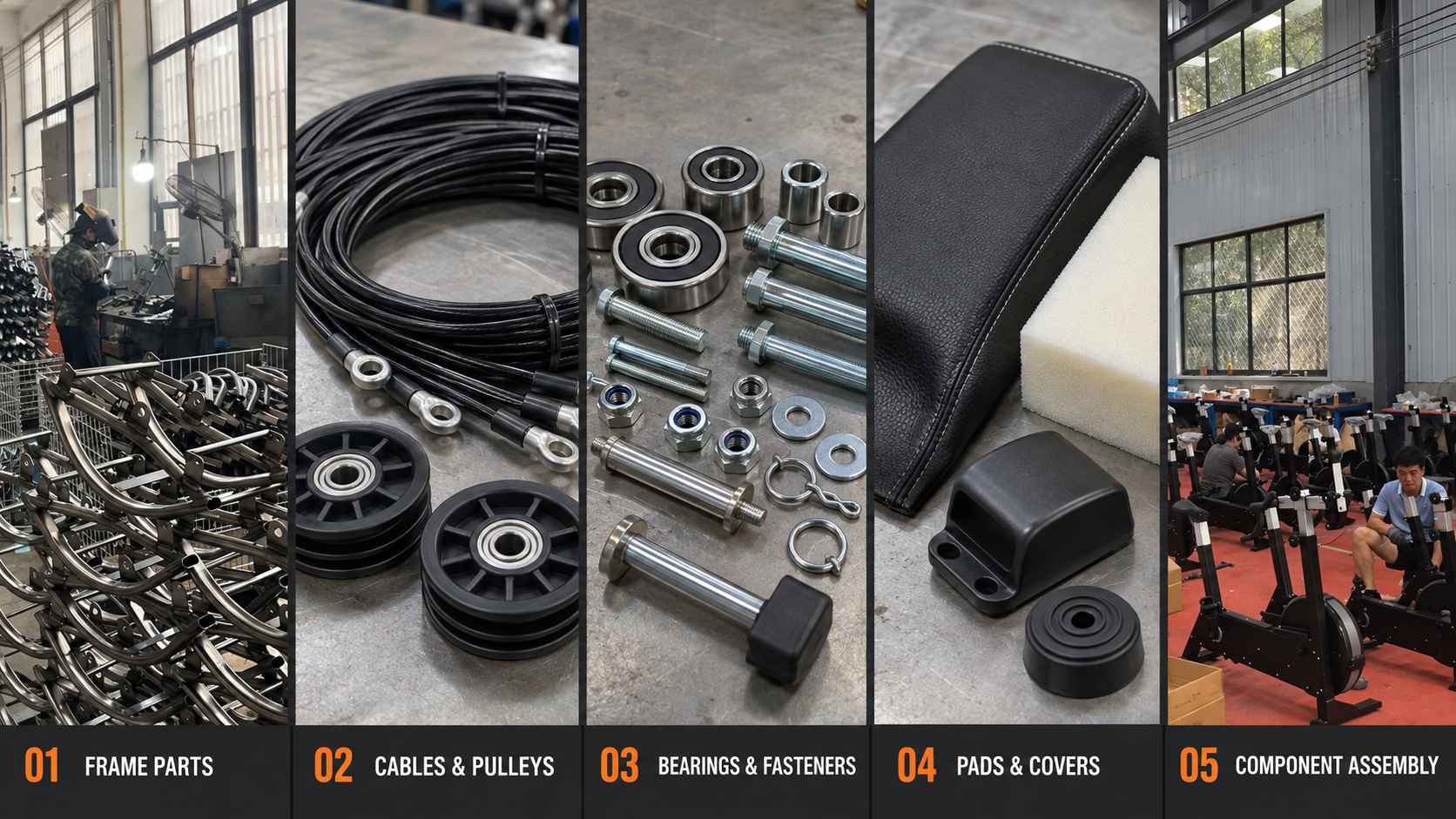 Material and Component Checks Before Production
Incoming steel, upholstery, cables, pulleys, bearings, fasteners and covers are checked before entering production. Inspection focuses on whether the supplied materials match the confirmed product requirements and are suitable for the next manufacturing stage.
During welding and frame assembly, key frame dimensions, alignment and weld condition require attention. During final assembly, component fit, adjustment, movement, resistance and stability are reviewed where applicable.
For repeat orders, buyers should reference the previously approved model, sample or specification sheet. Any requested substitution should be confirmed before production rather than after components have entered the assembly line.
Information Needed for a Material-Based Quotation
For an accurate quotation, provide the equipment model, estimated quantity per model, intended commercial application and destination country. Also identify any required frame specification, upholstery preference, weight-stack configuration, accessories, covers, logo parts or market-specific requirements.
If an exact material or component is mandatory, include a specification sheet, drawing, clear photograph or reference sample. We will review availability, MOQ, sample requirements, production timing and possible effects on packing before confirming the order through our commercial gym equipment manufacturing process.